
Why does the number 13 frighten people in different countries? This article explores the religious, cultural, and psychological roots of the superstition and why it still affects everyday life.
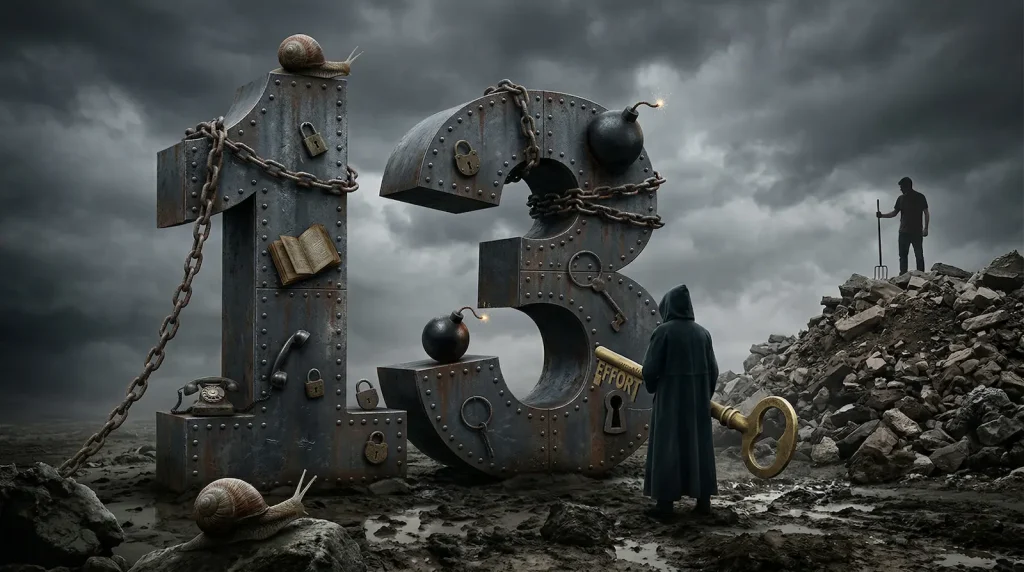
Why People Fear the Number 13: The Origin of the World’s Most Famous Superstition
There are numbers we treat as neutral. And then there are numbers that create a strange tension before anything even happens. The number 13 became exactly that: for some, it is just a digit, but for others, it is a sign of danger, bad luck, or an unsettling coincidence best avoided.
✨
The Fear of 13 Is Not a Minor Superstition, but a Cultural Reflex
People do not fear 13 because the number itself is “bad,” but because culture has layered meaning onto it for centuries. Superstitions rarely emerge from nothing. First there is a story, then repetition, then emotion, and only after that does an almost automatic reaction appear. This is exactly how the fear of 13 works.
This number has rooted itself so deeply in public imagination that people avoid it in hotels, airplanes, floor numbering, hospital rooms, and even seat rows. A person may not consider themselves superstitious and still feel slightly uncomfortable if they are given room 13 or a seat in the thirteenth row. What matters here is not rational meaning, but the power of collective association.
The fear of this number lives not only in private belief, but also in everyday habits, design, business decisions, and language. It is no longer just a superstition of individuals, but a cultural habit of adapting to something many people would rather not touch.
🕯️
One of the Roots Lies in Religious Symbolism and the Image of the “Extra One”
One of the best-known explanations is connected with Christian tradition. Popular culture often refers to the Last Supper, where thirteen people were at the table. After that, the theme of betrayal, death, and fatal ending began to attach itself to the number. It is important to understand that this is not proof that the entire global fear of 13 came from this one source. But the image strongly influenced how the number was perceived in European culture.
There is another symbolic explanation. The number 12 was long associated with order, completion, and harmony. Twelve months of the year, twelve zodiac signs, twelve hours, twelve apostles — this logic repeated itself across many systems. Against such a “complete” twelve, the number 13 looked like a disturbance of structure, something extra, something beyond the boundary, something that did not quite fit into familiar order.
And people are always cautious about what falls outside the system. If 12 feels like a closed circle, then 13 becomes what stands after it: the unknown, the unstable, the potentially dangerous. Sometimes fear is born not from one specific event, but from the feeling that order has been broken.
🔍
The Superstition Grew Stronger Through Stories People Easily Remember
The number 13 would not have become so famous without countless stories, legends, and repeated narratives feeding it. When a sign appears again and again in disturbing stories, it starts living a life of its own. People may not remember the original source, but they remember the conclusion: “there is something bad about this number.”
This is how collective memory works. One dramatic event linked to the number 13 is remembered much more strongly than hundreds of ordinary days when nothing happened. If someone moved into apartment 13 and later experienced a series of problems, that story sounds convincing. If another person lived there peacefully for ten years, almost no one will repeat that as something worth remembering.
That is why superstitions often outlive logic. They are held together not by statistics, but by vivid coincidences that are easy to retell. The more stories people hear about the “fatal 13,” the more natural the fear begins to feel.
🧠
The Psychology of Fear: The Mind Loves Confirmation
One of the main reasons the superstition around 13 remains so persistent is connected with how human thinking works. We do not simply observe the world. We constantly search for patterns in it. And very often, we notice what confirms what we already suspect.
If a person believes that 13 brings bad luck, they will remember unpleasant events on that date much more strongly and will barely notice normal or good experiences. This is selective perception. The superstition increases anxiety, anxiety sharpens attention, and attention finds new “proof.” That is how a closed loop appears.
There is another mechanism as well. If someone feels nervous because of the number 13, they may act less confidently, rush, make mistakes, or misjudge a situation. As a result, the negative experience seems to confirm the fear. But the cause is not the number itself. It is the tension the number created.
That is why superstitions cannot be explained only by lack of education. Even rational people can fall under the power of symbols when those symbols have been repeated for years through culture and emotion.
🏨
The Modern World Has Changed, but 13 Still Shapes Everyday Life
The most interesting thing about this superstition is that it survived scientific progress and the digital age. We live in a technological world, yet the fear of 13 still affects very modern decisions. Some buildings do not have a thirteenth floor — after 12 comes 14. Some hotels skip room 13. In transport and service industries, the number is sometimes omitted simply because customers feel more comfortable that way.
This shows something important: superstitions survive not only where people sincerely believe in them, but also where others account for them as an emotional factor. Business does not always support the fear. Often it simply adapts to it. If people do not want to stay in room 13, companies find it easier to remove the number than to convince everyone it is neutral.
So the number 13 became not only a symbol of misfortune, but also an example of how collective anxiety can be built into the material world. Architecture, service, and numbering quietly reflect old fears that nobody officially approved, yet many people still feel.
🌙
The Strongest Superstition Is the One That Feels “Almost True”
The secret of this fear’s long life is that it does not seem completely fantastic. It does not require a person to adopt a whole worldview, ritual, or belief system. It needs only one small thought: “what if?” That half-ironic, half-serious form is exactly what makes the superstition so durable.
A person may laugh at it and still feel a little tense. They may say they do not believe in it and still hesitate to sign an important contract on Friday the 13th. They may consider themselves modern and still feel a sting of discomfort when the number unexpectedly appears in a ticket, house number, or seat assignment.
The fear of 13 is not only a story about mysticism. It is a story about how a symbol can become stronger than its literal form. That is why it remains the most famous superstition in the world: not because of the magic of the number itself, but because of the magic of human imagination, memory, and repetition.
FAQ
Why 13 specifically and not another number?
Because many disturbing associations have gathered around it through history. In addition, in many cultures the number 12 symbolized completeness and harmony, while 13 seemed to go beyond that order.
Do all nations fear 13 in the same way?
No. Different countries have their own “unlucky” numbers. In some Asian cultures, for example, another number causes stronger fear. But 13 became the best-known symbol of bad luck in the Western world.
Is there scientific evidence that 13 brings misfortune?
No. There is no reason to believe that the number itself affects events. Its power is cultural and psychological, not objective.
Why do even non-believers sometimes avoid the number 13?
Because superstitions work not only through belief, but also through emotional habit. A person may not believe literally and still feel inner discomfort because of familiar cultural associations.
Can such fear be overcome?
Yes, if a person understands how it works. When you see that anxiety comes not from the number itself, but from accumulated cultural meaning, the fear often weakens.
The number 13 became powerful not because it contains hidden force, but because humanity has been filling it with tension, meaning, and anxiety for centuries. And perhaps the most interesting thing here is not the number itself, but our need to give ordinary things an almost mystical weight.